
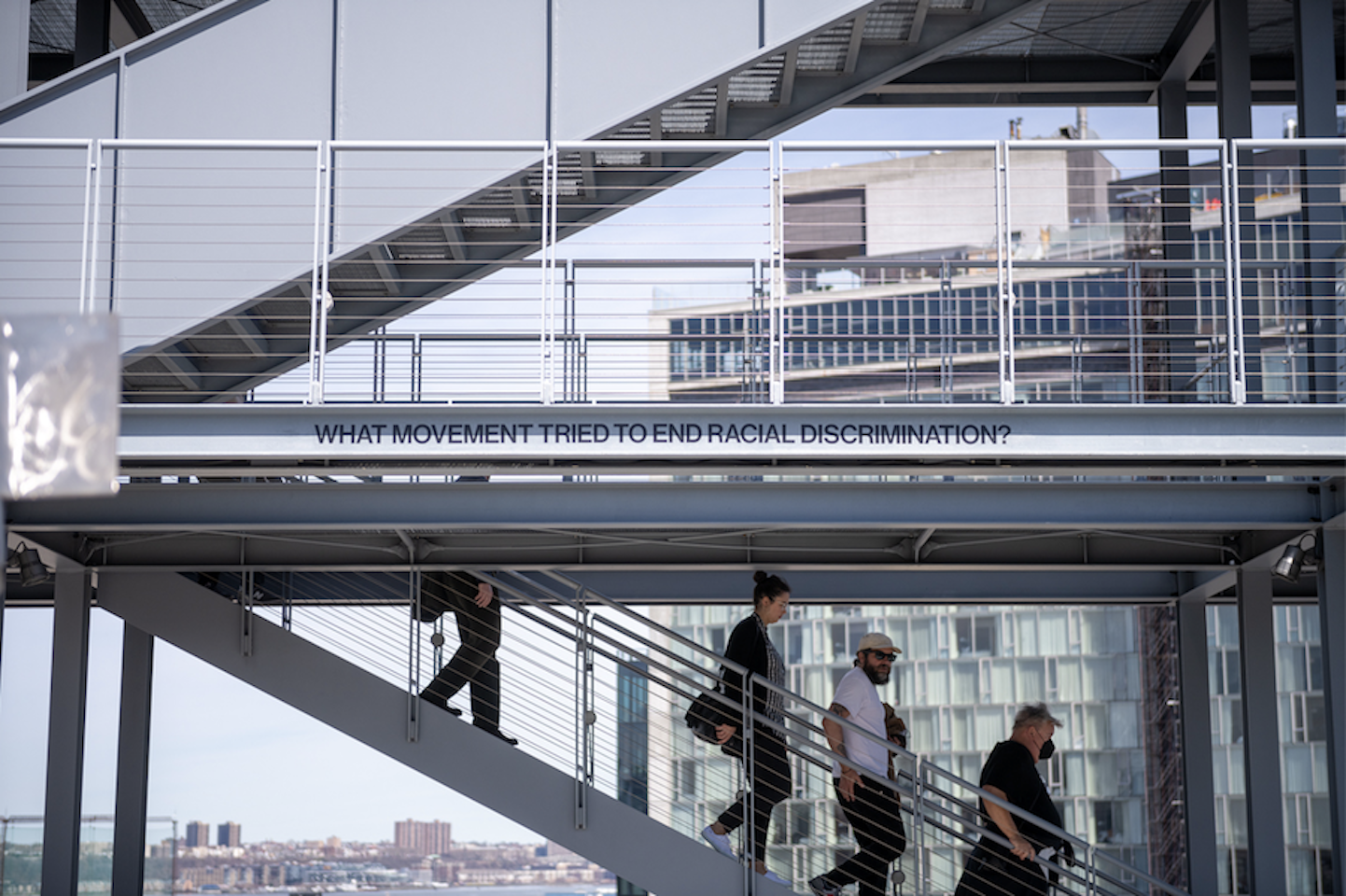
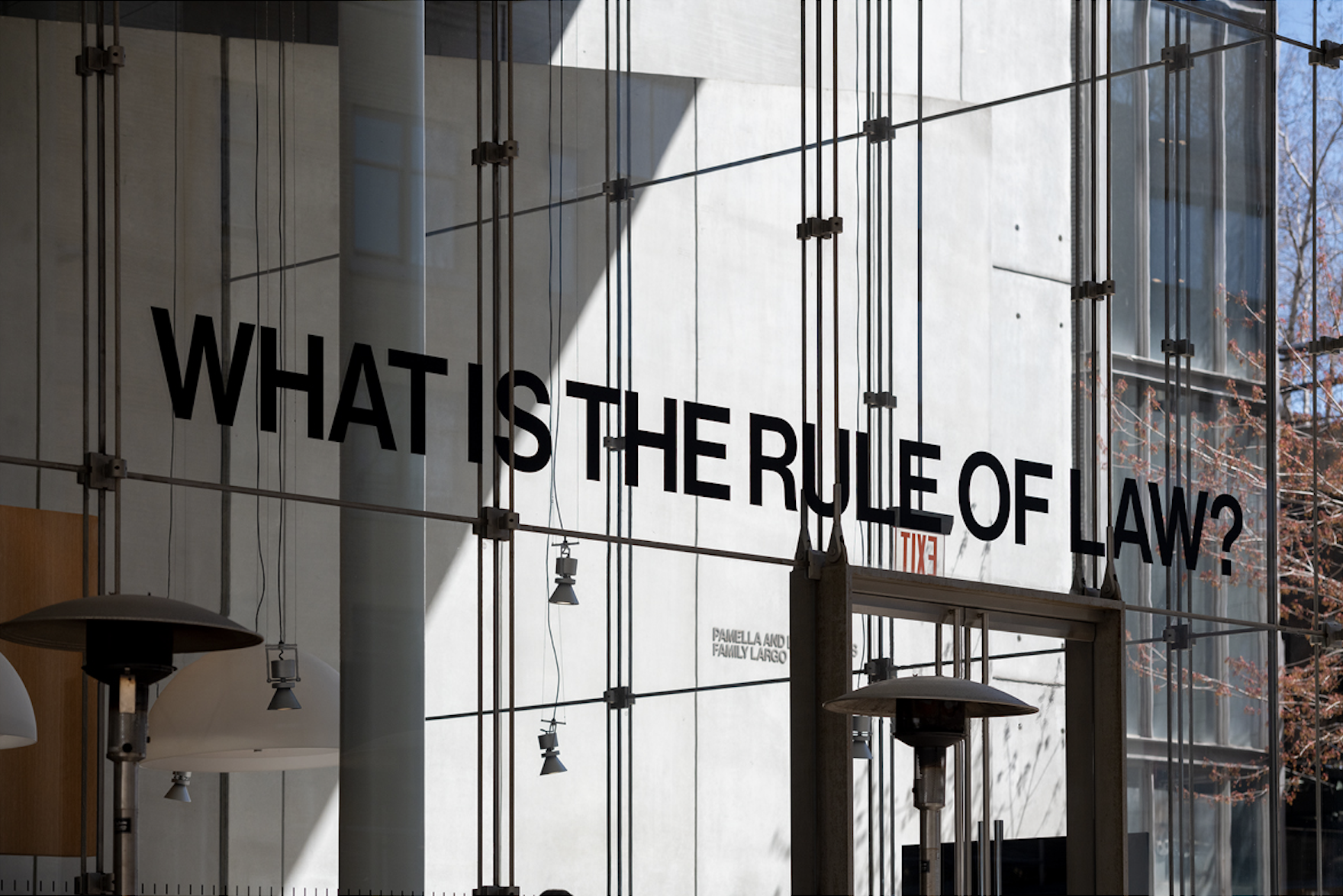
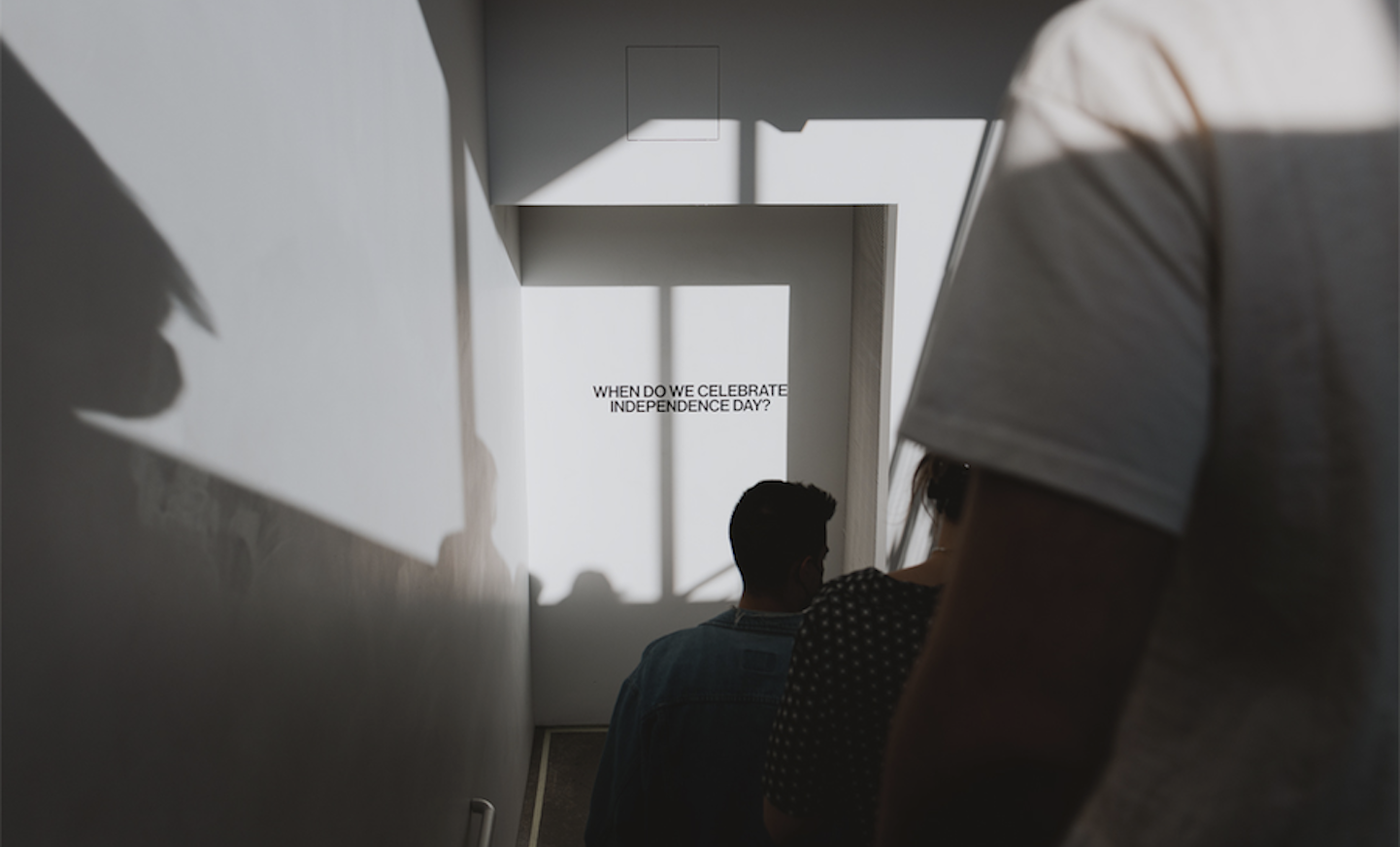
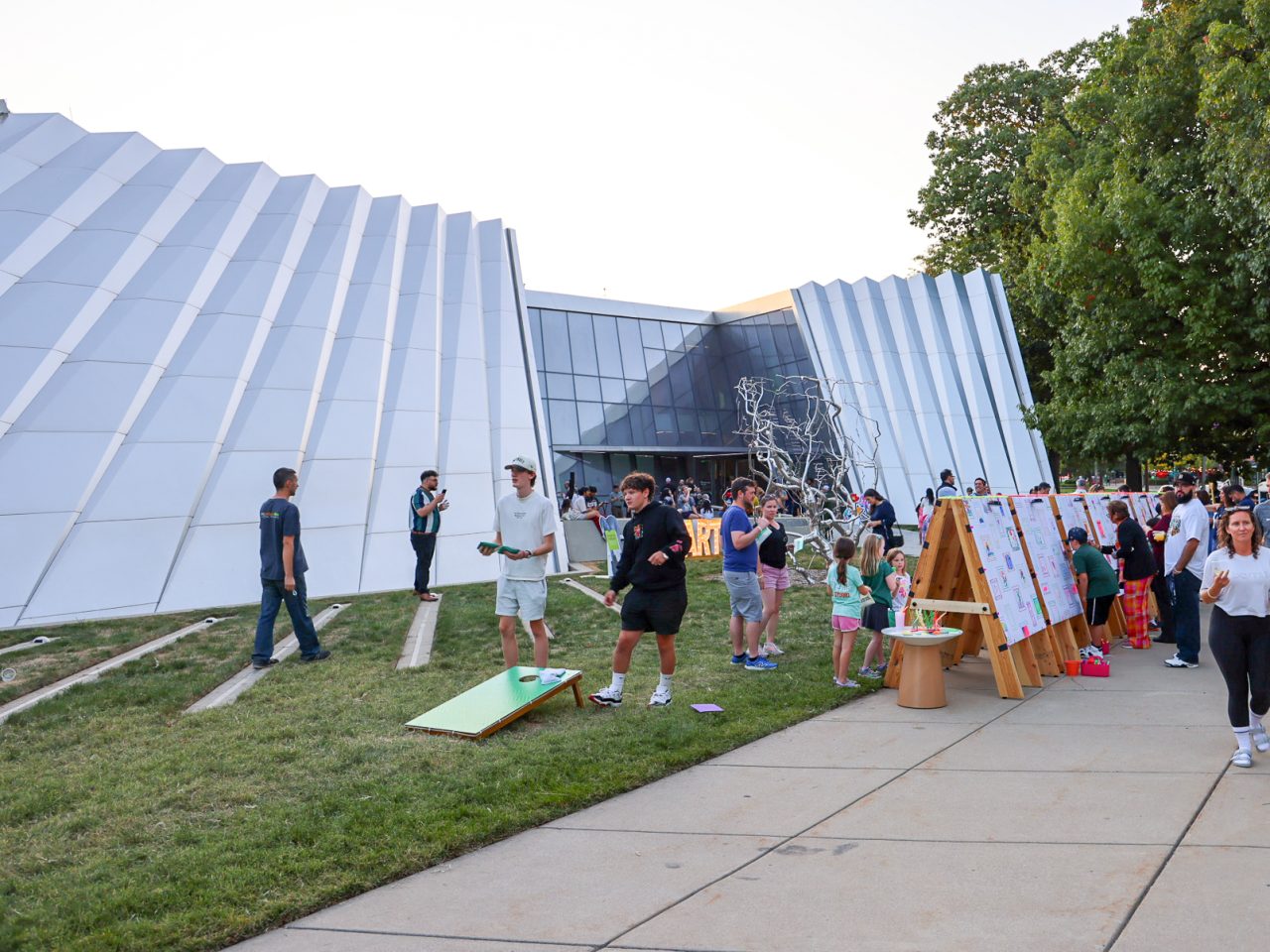
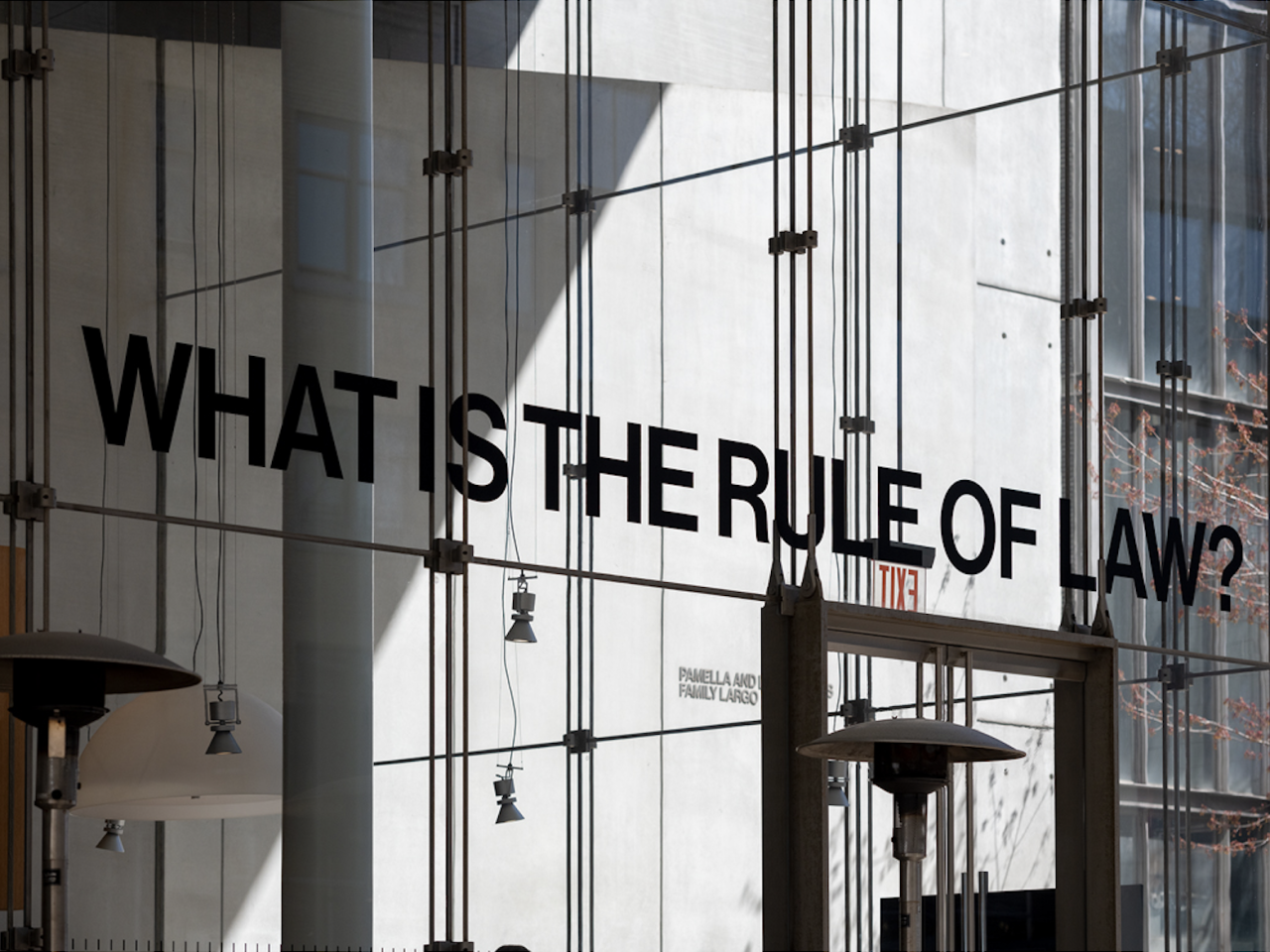
This intervention can be found throughout the museum and across MSU’s campus.
About the Exhibition
How well do we know the principles of American government, the rights of American citizens, and pivotal moments in American history?
Rayyane Tabet: 128 Civics Questions is a site-specific intervention by artist Rayyane Tabet (b. 1983, Aachqout, Lebanon; lives and works in Beirut, Lebanon) that presents questions from the study guide for the United States 2025 Naturalization Civics Test developed by U.S. Citizenship and Immigration Services. Select questions from the exam that people take in order to become US citizens appear throughout the MSU Broad Art Museum, often in unexpected places. These questions prompt us to assess our own knowledge and (mis)understandings of American history and civic engagement.
Trained as a sculptor and architect, Tabet’s conceptual practice interrogates the unexpected relationships between the past and present. Rooted in extensive research, Tabet mines both personal and official histories as well as his own lived experience to inform his work, which is often site-specific. The resulting projects offer new perspectives on historical events, addressing issues such as accumulation in museums, the rise of technology, and labor and agriculture in the Gulf.
128 Civics Questions was originally inspired by Tabet’s own experience preparing for the US citizenship exam. During his studies, Tabet realized, “that if these questions and phrases were taken out of context . . . they could be read like concrete poetry or open-ended, contradictory, and often hermetic questions.” Tabet’s first iteration of this project was titled 100 Civics Questions and was commissioned for the Whitney Biennial in New York in 2022.
At the MSU Broad Art Museum, Tabet reimagines 100 Civics Questions in new form: 128 Civics Questions. This transformation follows revisions to the Naturalization Civics Test made in 2025, which added additional questions to the study guide, and shifted the requirements for passing the exam from answering 6 out of 10 questions correctly to 12 out of 20. The extended exam process illuminates the complexities and precarities of obtaining citizenship, including long wait times, high expenses, and now, a more complex and in-depth study process. Together with the video Learning English (2022), the two works form the series Becoming American, which remains an ongoing project by the artist.
Tabet’s intervention unfolds across the MSU Broad Art Museum as part of the exhibition We Are This Land: Meditations on the Great American Experiment and extends outward across MSU’s campus. As you move around the museum and campus, you’ll encounter questions that seem like philosophical inquiries—both familiar and out of place. In turn, you’re invited to reflect on your knowledge of American history and what it means to become American in our contemporary moment.
Rayyane Tabet: 128 Civics Questions is organized by the Eli and Edythe Broad Art Museum at Michigan State University and curated by Rachel Winter, Ph.D., assistant curator, with support from Nat Swartz, curatorial research assistant, and in partnership with the artist, Rayyane Tabet. Support for this exhibition is provided by the Eli and Edythe Broad Endowed Exhibitions Fund with additional support provided by the Alan and Rebecca Ross Endowed Exhibitions Fund. The museum also extends special thanks to the artist and Sfeir-Semler Gallery, Beirut and Hamburg.
Resources
Access the study guide for the 2025 version of the civics test.
Learn more about studying for the exam.
Learn more about applying for naturalization.
For more resources about citizenship in the greater Lansing area, check out the Immigration Law Clinic at MSU. The Michigan Immigrant Rights Center (MIRC) can assist eligible noncitizens in applying for naturalization: https://michiganimmigrant.org/citizenship-ciudadania.
Related Links
Images
 Fall Opening Party
 Curator Tour: 128 Civics Questions (Muslim Journeys Edition)
 Winter Opening Party